Marketing
Learn how to stop renting shared leads from middleman platforms and build an asset that generates direct pest control calls.
You get more pest control customers by owning your local search presence instead of renting shared leads from middleman platforms. Focus on optimizing your Google Business Profile for high-intent searches, building a fast website that converts visits into phone calls, and running targeted local ads during peak swarming seasons. This systematic approach builds a permanent marketing asset that you control.
Paying for shared leads from massive directory sites is a short-term survival tactic, not a long-term growth strategy. These platforms sell the exact same lead to three or four competing exterminators simultaneously. This setup forces you into a price war, reducing your profit margins before you even turn the key in your service truck.
This model also damages your route density. When you rely on shared lead networks, you have no control over where the jobs are located. You might win a bed bug job thirty miles north in the morning, and a rodent inspection forty miles south in the afternoon. Driving past dozens of non-customer homes wastes fuel, puts unnecessary wear on your trucks, and limits the number of stops your technicians can make in a day.
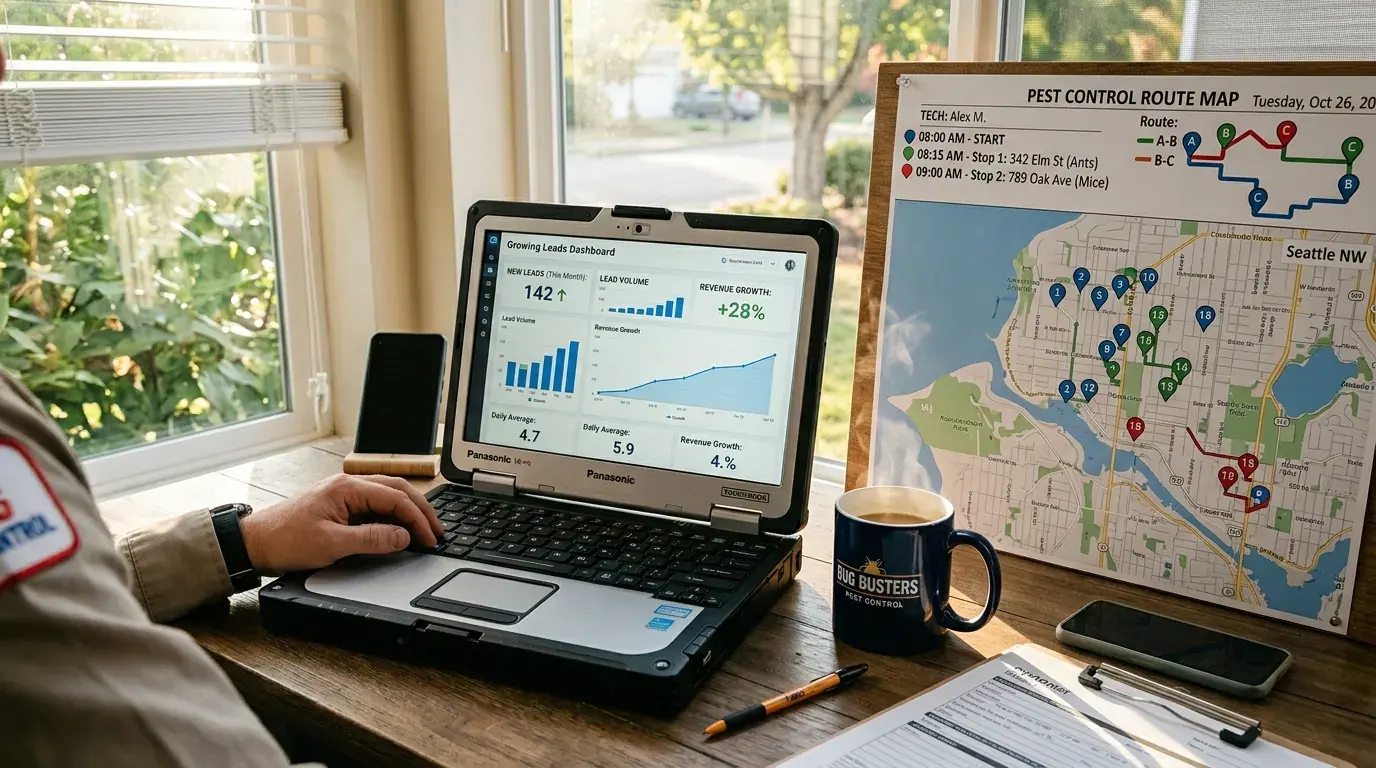
Real profitability in the pest control industry comes from route density. You want to service four homes on the same street, not four homes across three different counties. Building a direct pipeline of local customers allows you to target specific zip codes and neighborhoods, building the density required to maximize your daily ticket size.
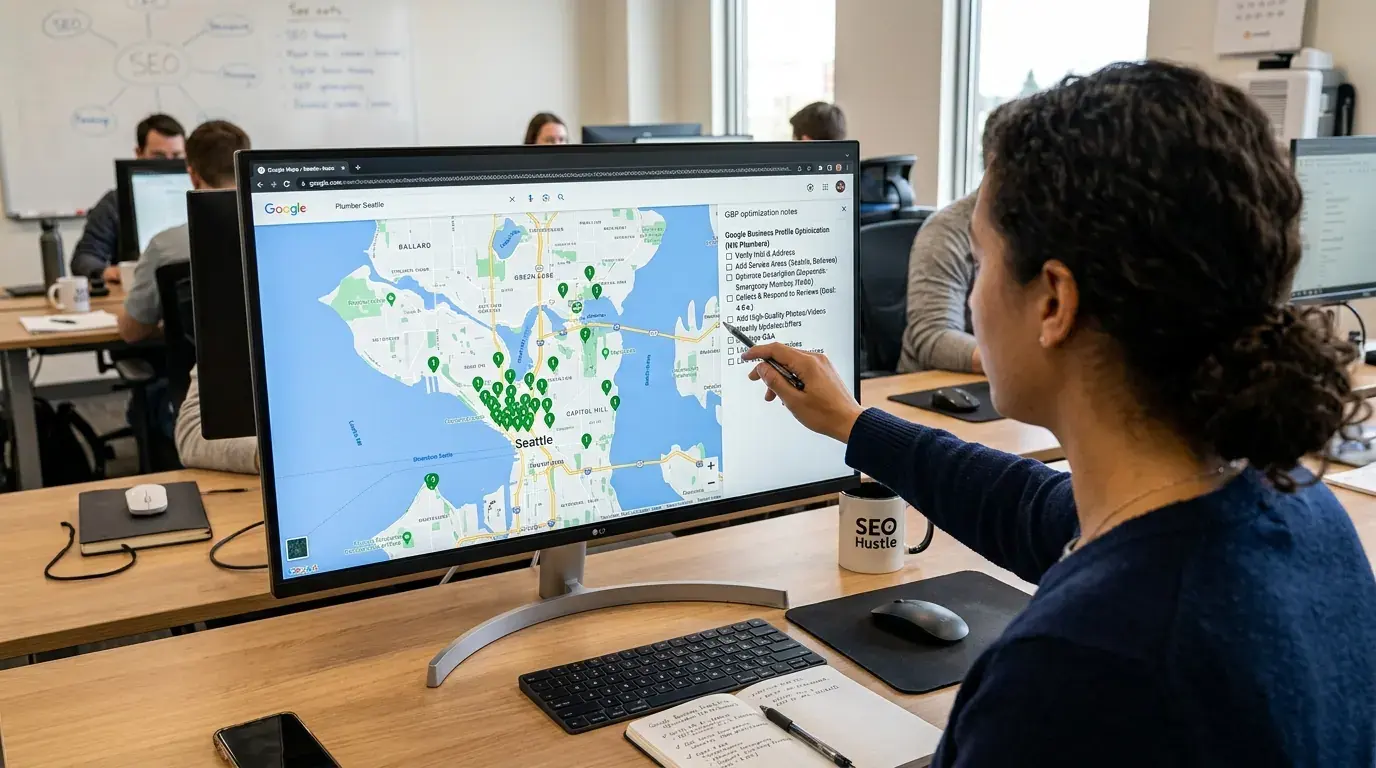
The local map pack drives the majority of immediate residential pest control phone calls. When a homeowner discovers a termite swarm or a wasp nest, they do not scroll past the map to read organic blog posts. They look at the top three listings on Google Maps, check the star rating, and click to call. Winning these jobs requires systematic local optimization.
First, claim and verify your Google Business Profile. Ensure your business name matches your legal registration exactly. Do not stuff keywords into your business name unless they are part of your legal entity, as Google frequently suspends profiles for this violation. Keep your name, address, and phone number consistent across all online directories to establish trust with search engine algorithms.
Second, focus on review velocity. This refers to how consistently you receive new customer reviews. Google favors profiles that get reviews regularly over those that receive a bulk batch and then go silent for months. Create a process where your technicians text a direct review link to the homeowner before leaving the property. A quick, polite request while the technician is standing on the porch yields the highest response rates.
Third, upload real photos weekly. Avoid stock images of pests. Instead, upload photos of your branded trucks, your technicians in uniform, and your team performing actual treatments. These geo-tagged images prove to Google that you are actively working in your stated service areas. For a step-by-step breakdown of how to configure your profile, read our guide on pest-control GBP optimization.
Traffic is useless if visitors leave your website without booking a service. Most pest control websites fail because they are designed like online brochures rather than conversion tools. A homeowner with an active rodent problem is stressed and wants a fast solution. Your website must make contacting you the easiest path available.
To turn search traffic into booked jobs, implement these specific layout rules:
Your website is the foundation of your digital presence. Implementing clean pest control website design ensures that your advertising and organic search efforts translate into actual revenue instead of wasted clicks.
Search engine optimization takes time to build momentum, but you often need routes filled immediately. Paid search advertising allows you to buy your way to the top of Google search results instantly. This is particularly valuable during seasonal spikes, such as spring termite swarms or summer mosquito surges, when search volume peaks.
To run profitable campaigns, you must target keywords with clear commercial intent. Avoid broad match terms that trigger ads for non-service searches. If you bid on the broad term "ants," you will pay for clicks from students doing research or homeowners looking for DIY advice. Instead, bid on exact phrases like "carpenter ant exterminator" or "termite treatment cost."
Equally important is your list of negative keywords. These are terms you explicitly prevent your ads from showing for. Add negatives like "free," "DIY," "jobs," "salary," and "identification." This prevents your budget from being drained by non-buyers.
Consider using Local Services Ads alongside traditional search ads. These are the Google Guaranteed listings that appear at the very top of the page. Unlike standard pay-per-click ads, you only pay when a prospect calls you directly through the platform. Managing these campaigns requires daily attention to lead disputes and budget adjustments. You can learn more about setting these up in our guide to pest control Google Ads.
Getting more customers requires targeting the phrases homeowners actually type when they have an active pest problem. Many businesses waste time writing articles about pest biology that attract national readers who will never buy from them. Your focus should remain on local commercial keywords.
We categorize high-intent keywords into three main groups:
By mapping these terms to dedicated landing pages, you build a highly targeted site structure. For a complete list of terms to target, read our resource on pest control SEO keywords.
Managing your own local marketing is viable when you are starting out with a single truck and have more time than money. However, as your business grows, self-managed marketing quickly hits a wall. The primary limitation is consistency.
SEO and digital marketing are not one-time setups. They require continuous attention. If you stop posting updates, neglect your review collection, or fail to monitor your ad campaigns because you are busy out on routes, your leads will dry up. A successful campaign requires weekly technical audits, link acquisition, and negative keyword optimization.
When you reach the point where your time is better spent hiring technicians and managing route logistics, outsourcing becomes the logical choice. It is helpful to understand typical industry pricing so you can budget accordingly. For a single service territory, expect to invest $1,000-1,800 per month for professional management. If you operate a multi-route business covering a wider metropolitan region, typical budgets run $1,800-3,000 per month. Large multi-branch companies with physical offices in multiple cities require budgets of $3,000 or more per month.
Begin by claiming your Google Business Profile and auditing your existing website on a mobile phone. Check if your phone number is easily clickable and ensure your service area is clearly visible on the homepage without scrolling. These two simple checks cost nothing and can immediately improve your lead flow.
If you prefer to focus entirely on running your routes and managing your team while professionals build your exclusive marketing assets, review how it works to see our specific process for growing pest control companies.
Pest Control SEO Guys
Written by the people who run the campaigns
Every guide here comes out of work we do for pest control companies: the audits we run, the pages we ship, and the reporting we hand back. It is not general SEO advice with pest control words dropped in.
Want this done for you?
Our marketing service handles everything in this guide, built specifically for pest control companies.
Enter your email for a free quote. We'll show you where you rank today, who's ahead of you, and the fastest path to more calls.
Need an expert now? Call +1 (656) 253-2595